
A tarp is the cheapest shelter there is and the easiest to buy wrong. Too small and the rain finds the edge of your sleeping bag at 3 a.m.; too big and you are carrying a sail. The right size depends on three honest answers — how many sleepers, what pitch you actually use, and whether the tarp is just a roof over the bags or the room the whole camp lives in when it rains. Answer them here and get the size, the ridgeline, and the cordage in one pass.

Size your tarp
—
—
—
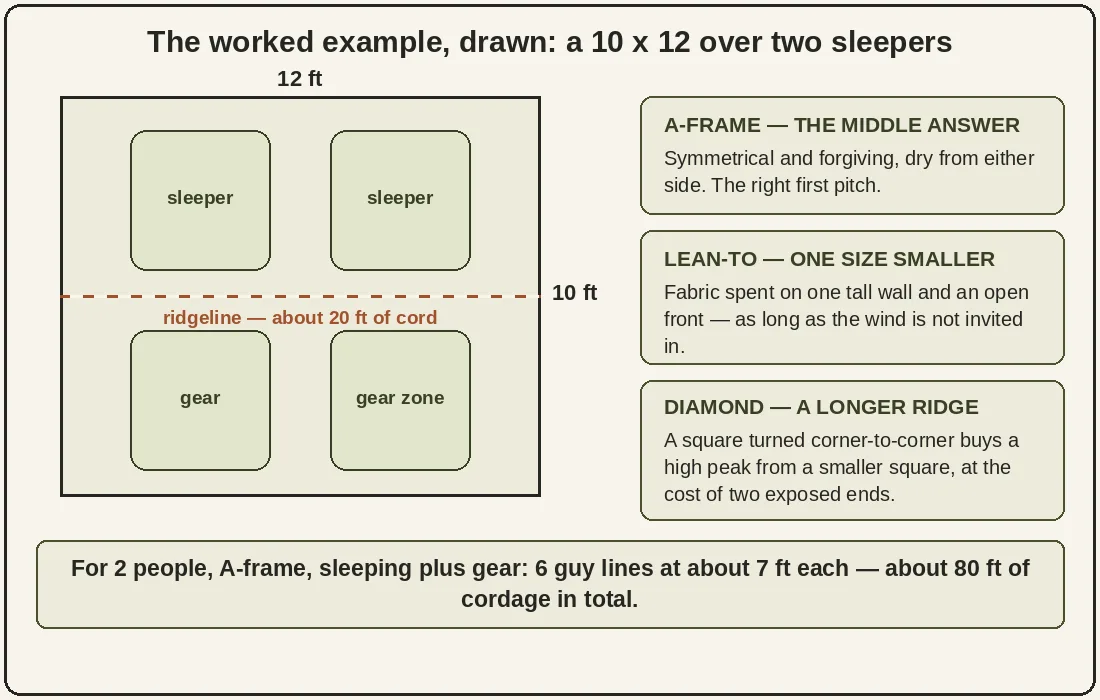
Notice what the pitch does to the answer. A lean-to spends its fabric on one tall wall and an open front, so the same crew fits under a size smaller — as long as the wind is not invited in the open side. A diamond pitch takes a square tarp and turns it corner-to-corner, which buys a long ridge and a high peak from a smaller square, at the cost of two exposed ends. The A-frame is the middle answer and the right first pitch: symmetrical, forgiving, and dry from either side.
Worked example: the starting answers — 2 people, an A-frame pitch, sleeping plus gear — come out at a 10×12 tarp, a ridgeline of about 20 feet, 6 guy lines at about 7 feet each, and about 80 feet of cordage in total.
Questions people ask
Is a 10×10 tarp big enough for two people? For sleeping, yes — two pads side by side take about 4 feet of width, and an A-frame at that size leaves a dry margin on each side in ordinary rain. Add gear inside or a day of sitting out weather and it gets small fast, which is why the calculator above steps two people up to a 10×12 the moment gear joins the plan.
How much paracord do I need for a tarp? More than feels reasonable the first time: the ridgeline alone is the tarp’s length plus working slack at both ends, each guy line wants about 7 feet to reach a stake at a useful angle, and something always needs a spare length. For most two-person setups the honest total lands between 75 and 100 feet — one standard hank, bought before the trip and not at the trailhead.
Square or rectangular? Rectangular if you pitch A-frames and lean-tos — the long side is your ridge and your coverage. Square if you pitch diamonds or want one tarp that does everything passably. Most people are best served by a rectangle in the size above and a pitch they have practiced in the yard, in daylight, before the sky makes the decision for them.
Our Shelter & Sleep section is where tarp and shelter comparisons will land, and the tarp how-to — knots, ridgelines, and the pitches above — is in the Shelter Tactics queue.
Tarps that fit this math
No tarp comparison on the site yet. Three tarps that cover the sizes this calculator recommends, from heavy-duty to budget:
Aqua Quest Defender 10×10
The heavy-duty pick: serious waterproofing, seam-taped — the one to leave up through a week of weather.
Kelty Noah's Tarp 12
The versatile classic: plenty of tie-out points and sized right for two people with gear.
Wise Owl Outfitters Rain Tarp
The budget benchmark: the rain fly a lot of campers start with, in the sizes the table above calls for.
As an Amazon Associate, Shelter Tactics earns from qualifying purchases. It never changes a score or a number on this page.